


Immigration: Experience trumps lecturing
Of the 1.7 million eligible voters in the state of Saxony-Anhalt, 43.8 per cent voted for the AfD in the state election on 6 September, with a record turnout of 77.8 per cent. (2) Saxony-Anhalt’s incumbent Minister-President, Sven Schulze (CDU), acknowledged this result with the remarkable statement: “Some say this is a dark day for Saxony-Anhalt. I say: this is democracy. And the people went to the polls today.” (3) One can look for many reasons to explain the majority voting decision of the people of Saxony-Anhalt: the perceived neglect compared to citizens in western Germany, economic problems, demographics, Russian influence, or simply more anger at the elites than political reason.
Immigration is driving support for the AfD
However, with regard to western Germany, a sigh of relief would be misplaced. This was made clear by the opinion poll in early September (albeit subject to some uncertainty). For there is one concern that citizens in both the east and west seem to share: that of migration. In this context, the findings of a research team led by sociologist Martin Schröder, a professor at Saarland University, are revealing: it is not those left behind by modernisation who vote for the AfD. In their new academic study, the researchers conclude that it is, above all, concern about immigration that leads voters to tick the box for the AfD. (4)
As stated in the university’s publication of 6 August 2026: “'Many political actors argue that improving social and economic conditions could deprive right-wing populist parties of their breeding ground. Our analyses suggest that cultural and migration-related attitudes are considerably more important,' the team concluded with regard to political practice. For the research, the study’s findings mean that explanatory models focusing primarily on social deprivation fall short, as, in the authors’ view, concerns about immigration already explain support for the AfD so comprehensively that additional explanations provide only limited new insights.”
AfD rejects the EU and the euro
The issue of migration thus demonstrably drives support for the AfD. Yet this party has many other policy positions to offer, particularly regarding the EU. This is hardly surprising, given that it was founded in 2013 in protest against the euro rescue policy – largely championed by university professors of economics. (5) In its manifesto for the European elections 2024, it rejects the EU as it currently exists. (6) It advocates “the idea of a Europe of nations, a European community of sovereign, democratic states which work together for the benefit of their citizens on all those tasks that can be better tackled collectively.” (p. 8) And: ‘Given that the EU cannot be reformed, we advocate the establishment of a confederation of European nations.’ (p. 10), a ‘new European economic and interest community’. (p. 11)
Leaving aside the fact that the AfD’s political programme is internally contradictory in this area too: of course, there is much about the EU that is open to criticism and in need of improvement. But this applies just as much to the nation state, and every local politician has experienced this first-hand. Yet no one in the AfD would therefore call for Germany to be abolished. The founding of the EU in 1957 was a response to the experiences of the generations who lived through the World War and the post-war period. Born out of a historic moment, it is the product of many compromises and challenges. Anyone wishing to preserve the benefits of common European policies, such as the single market, must necessarily accept common rules and administration – with all their compromises. And the same applies to the single currency.
Against immigration – and against the EU?
If concerns about immigration are the overriding factor in a large proportion of current voting decisions in Germany, a vote for the AfD also amounts to endorsing anti-EU policies. Many voters are apparently willing to swallow this bitter pill, even though recent polls show that the EU enjoys the trust of up to two-thirds of European citizens. (7) This means that the failure to address citizens’ concerns regarding immigration also jeopardises the EU and the pursuit of European sovereignty in a world in crisis. It seems that Europeans’ most important project is being run into the ground before those in charge in Germany publicly admit that they made an extremely problematic decision in 2015.
The arrogance of those in power
It can be stated quite plainly: Germany was led into this difficult situation by the arrogance of those in power within political parties, the media, the churches and NGOs. In politics, only a few had the courage to voice critical remarks in the face of the pressure to conform to a publicly cultivated ‘culture of welcome’. They were vilified and often sidelined. It is all the more astonishing, then, that Cem Özdemir, a politician from the Greens (a ‘conservative ultra-realist’) (8), has been speaking out clearly on this issue for some time now. ‘We also underestimated just how much immigration is an imposition on those who are already here. The questions and fears this triggers, which we must take seriously. And that neither the housing market nor our schools were really prepared for this.’ (9) A year later, as the elected Minister-President of the state of Baden-Württemberg, he added: ‘As a social worker, I learnt that lectures are no match for experience. In recent years, politicians have all too often steamrollered over people’s fears and concerns.’ (10)
Strengthening borders – the EU as a protective shield
Many Europeans perceive the EU as a cosmopolitan ‘spearhead’ that undermines the protection offered by the nation state, to the detriment of the indigenous population. On the other hand, committed Europeans are aware that the EU is their ‘protective shield’ in a world in upheaval. The aspect of protection provided by the EU should therefore continue to be emphasised in public debate. The same applies to the value of borders. Anyone who abolishes internal borders must ensure that external borders function effectively. This is the responsibility of the Member States concerned – and FRONTEX, a European Union agency based in Warsaw. (11) In this regard, there is still much to be done. “According to the President of the European Commission, the EU must better equip itself for the future: more must be done to strengthen borders at critical points. Among the measures she cites are ‘enhanced surveillance and, where necessary, the use of physical barriers’,” reported the Tagesschau on 3 August 2026. (12).
Indeed, borders are also much more important from a political perspective than some realise: “… I argue for a universal right to individual and collective self-determination, which is equally incumbent upon all (individuals, collectives, states). Without borders, there can be no individual, collective or state self-determination, nor any individual, collective or state responsibility. …” said the philosopher Julian Nida-Rümelin. (13) “Without structure, without legitimate and accepted borders, there can be no authorship, no accountability, no responsibility, no respect and no dignity.” – There is nothing more to add here.
Margit Reiser-Schober
Error in the content? – Error in the translation? – eurolandpost(at)gmx.eu
- Sonntagsfrage:
https://www.infratest-dimap.de/umfragen-analysen/bundesweit/sonntagsfrage/
- Landeswahlleiter Sachsen-Anhalt - Wahlergebnis der Landtagswahl am 6. September 2026:
https://wahlergebnisse.sachsen-anhalt.de/wahlen/lt26/erg_land.html
- Noch-Ministerpräsident Sven Schulze, CDU:
https://www.spiegel.de/politik/sachsen-anhalt-wahl-sven-schulze-kommentiert-afd-sieg-das-ist-demokratie-a-abd8bdcf-7de6-43d2-a146-0fa66441d22c
- Veröffentlichung der Universität des Saarlandes:
https://www.uni-saarland.de/aktuell/sorge-um-zuwanderung-viel-wichtiger-fuer-afd-erfolg-als-wirtschaftliche-benachteiligung-49934.html
- Bundeszentrale für politische Bildung - Parteigeschichte der AfD:
https://www.bpb.de/themen/parteien/parteien-in-deutschland/afd/273130/etappen-der-parteigeschichte-der-afd/
- Programm der AfD zur Europawahl 2024:
https://www.afd.de/wp-content/uploads/2023/11/2023-11-16-_-AfD-Europawahlprogramm-2024-_-web.pdf
- Umfrage zur EU:
https://www.pewresearch.org/short-reads/2026/05/28/in-several-european-countries-eu-gets-more-positive-ratings-today-than-during-brexit-vote/
- Frankfurter Allgemeine, 4. März 2026
https://www.faz.net/aktuell/politik/wahl-in-baden-wuerttemberg/landtagswahl-bw-2026-wie-cem-oezdemir-das-gruene-erbe-bewahren-will-110846601.html
- Frankfurter Allgemeine, 3. Mai 2025
https://www.faz.net/aktuell/politik/inland/cem-oezdemir-im-interview-ueber-zuwanderung-und-seine-zukunft-110449910.html
- Frankfurter Allgemeine, 25. Mai 2026
https://www.faz.net/aktuell/politik/inland/cem-oezdemir-wer-den-staat-als-gaengelstaat-wahrnimmt-verliert-den-glauben-an-ihn-accg-200865337.html
- FRONTEX:
https://www.frontex.europa.eu/
- Tagesschau: Von der Leyen fordert stärkeren EU-Grenzschutz
https://www.tagesschau.de/ausland/europa/vonderleyen-eu-ceuta-100.html
- Julian Nida-Rümelin: „Über Grenzen denken – eine Ethik der Migration“
Edition Körber-Stiftung, Hamburg 2017, S.164, 165
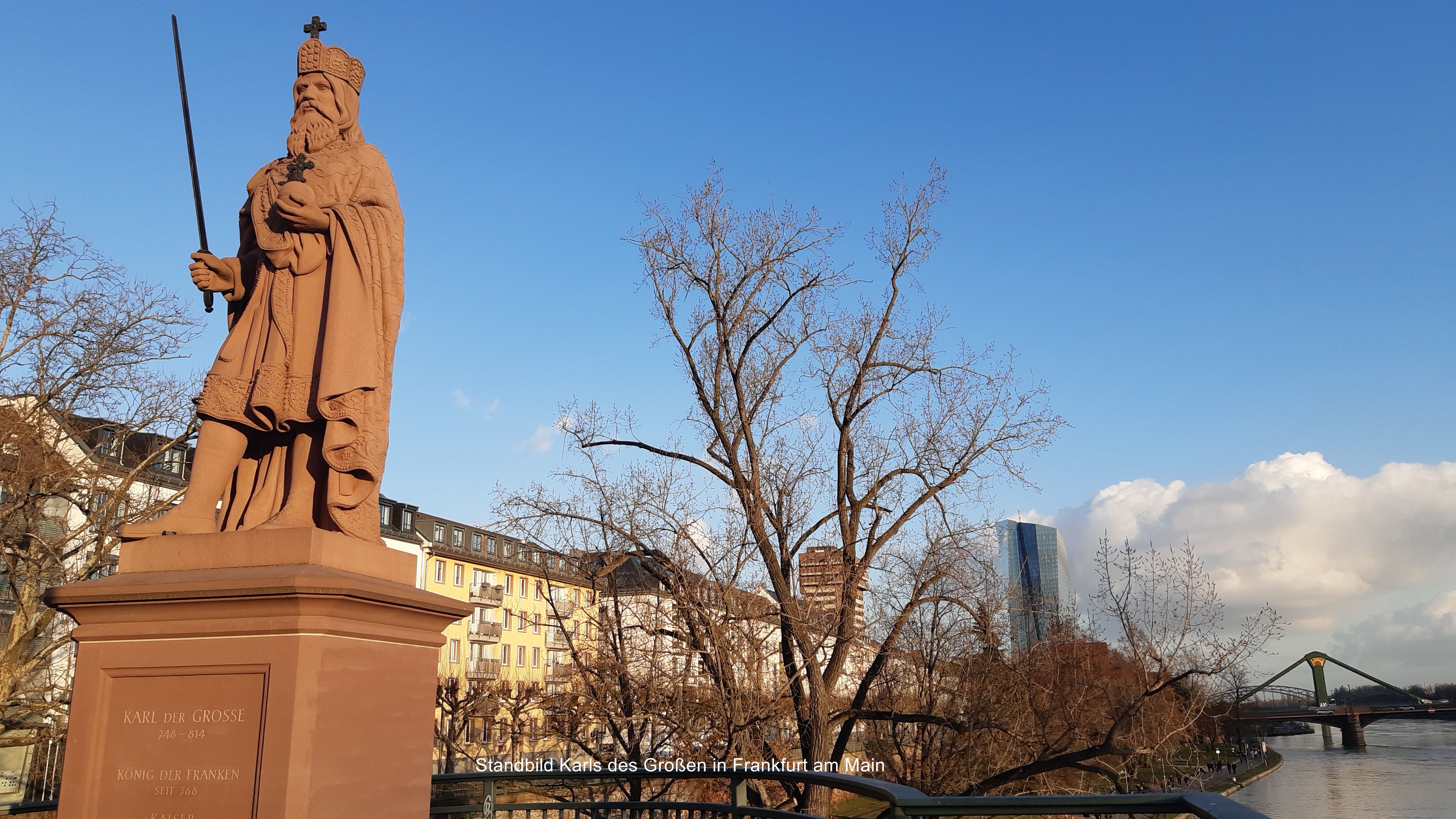
Zum Foto: https://www.kunst-im-oeffentlichen-raum-frankfurt.de/de/page154.html?id=432