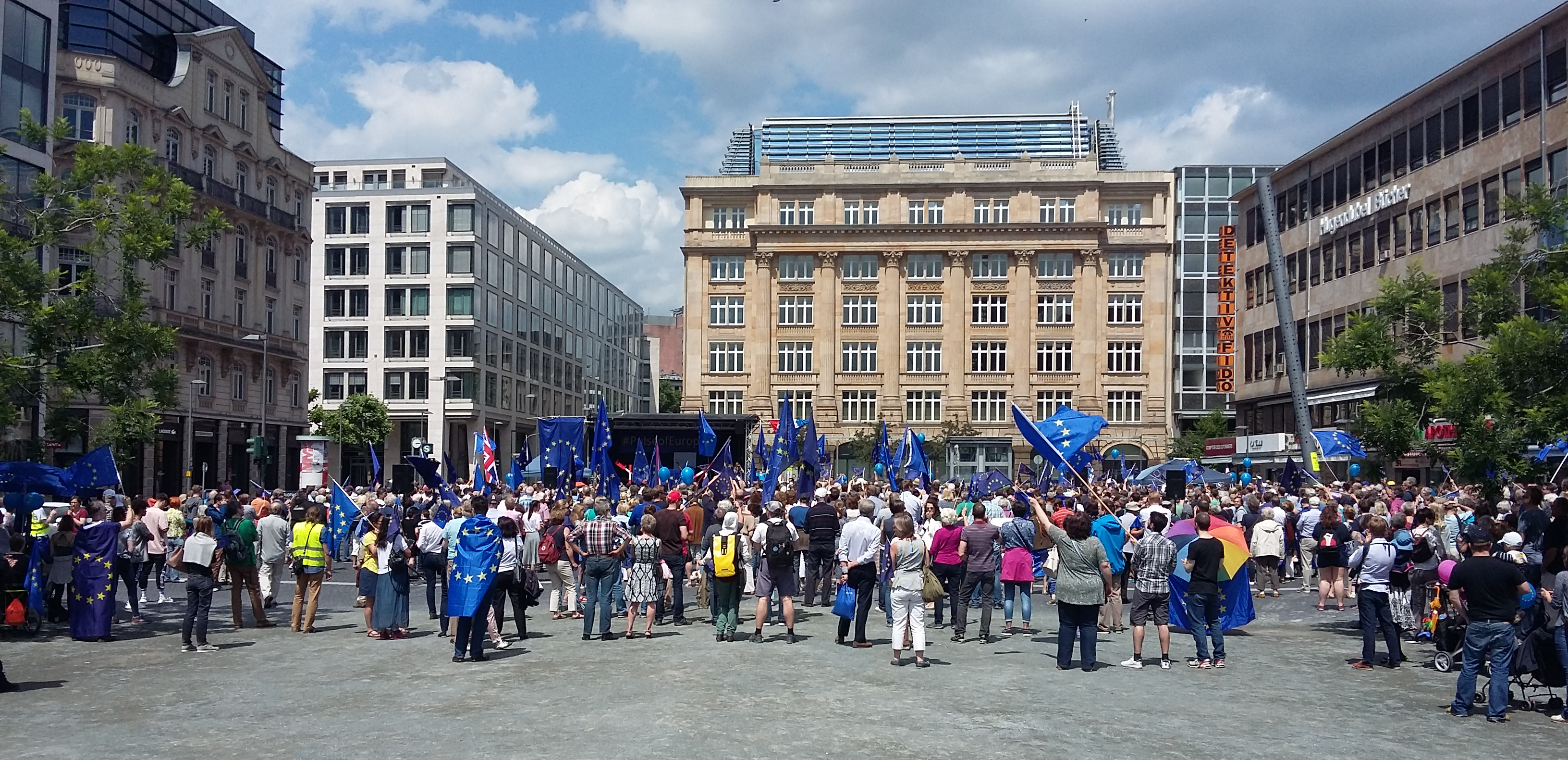
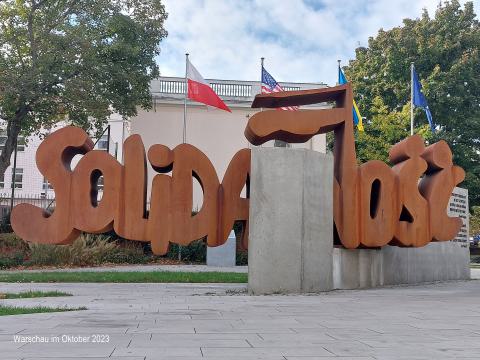
 “Good morning, European sisters and brothers!” This is how Łukasz Lisak greets the readers of his posts on X. (1) And at the weekend, he asks, “How was your week, my European sisters and brothers?” With this warmth, he stands out refreshingly from the generally lamented coarsening of communication on social media. Reason enough to strike up a conversation with this staunch European. Below is an interview by the Eurolandpost with the 34-year-old Pole.
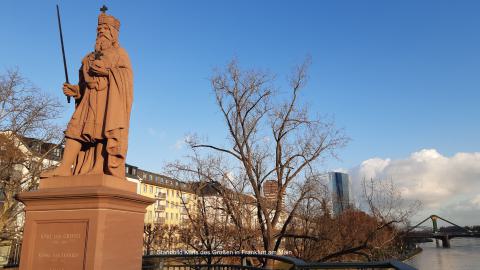 The political firewall ("Brandmauer") has clearly failed to deliver. Chancellor Merz had set out to halve the support for Alternative for Germany (AfD). Now, the state election on 6 September has halved the CDU’s support. This surge in support for the AfD should under no circumstances lead us to dismiss this as an East German phenomenon. For, as the so-called ‘Sunday poll’ of 3 September shows, the AfD also enjoys the highest level of support nationwide, with 27 per cent of the vote among all parties. (1) This is bad news for Europe, as the AfD rejects the EU, as well as the single currency. For committed Europeans, this raises the question: what should be the response?
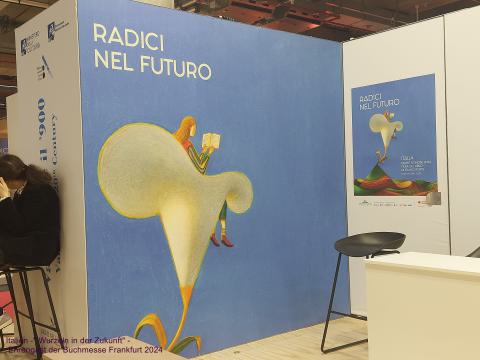 Italy – just hearing the word sets your imagination racing. Journalist Sebastian Heinrich aims to present German readers with a contemporary picture of Italy that is true to life, yet empathetic and critical. His podcast ‘Kurz gesagt: ITALIEN’ (1) was followed in 2024 by a book (2) of the same title. Both explore the country in a charming way, using Italian words that are difficult or impossible to translate. For behind each of these words lies a story that he shares. The author has selected 15 terms, arranged alphabetically, from ‘Autogrill’ to ‘Sanremo’. They cover everyday life, culture, geography and history. At least five of them can be regarded as political, and they all relate to democracy.
 Support for European integration has rarely been as high as it has been in recent years. Many Europeans realise that, in this world of crises and threats, they are better off with the EU than with their nation alone. (1) Nevertheless, right-wing parties, right-wing populists and nationalists are on the rise in many EU member states. (2) This is true, for example, of Germany (3) and Poland (4), and it could well prove to be the case for France in 2027 as well. How should we deal with this so as not to jeopardise what has been achieved in Europe – peace, freedom, democracy, the rule of law and prosperity? Below are some thoughts and suggestions on the matter. These are fruits of reading, plucked quite by chance from various branches of the great tree of political science literature aimed at the general public. – Let yourself be surprised.
 The EU is currently under pressure from all sides. Now there is increasing pressure ‘from below’: more European citizens want to become even more active. A recent example is The Europeans, (1) a website that went live in February this year. The Europeans are deeply dissatisfied with political leadership in Europe and its ability to solve problems in the interests of Europeans. (2) Among other things, they attribute this to the fragmentation of the European debate into 27 national debates. The Europeans therefore aim to contribute to the emergence of a vibrant European debate in future.
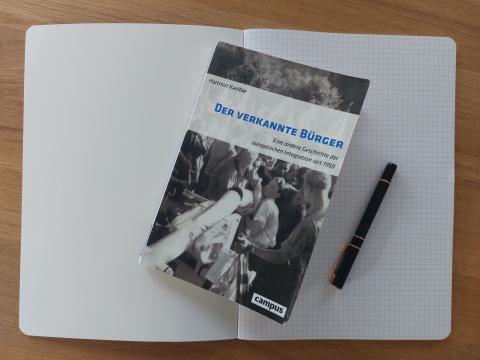 The mainstream narrative in Europe has traditionally been that the EU is a project of the elite that needs to be explained to citizens. Social historian Hartmut Kaelble (1) offers a different perspective on the citizens of Europe in his book ‘Der verkannte Bürger’ (The Misunderstood Citizen), published in 2019. (2) He taught as a professor of economic and social history at the Free University from 1971 to 1991 and as a professor of social history at Humboldt University from 1991 to 2008, both in Berlin. Kaelble examines the role of citizens in European unification and thus presents ‘A Different History of European Integration since 1950’. The book deserves more attention, and its contents are presented below.
 Many Europeans are looking ahead to the next elections with great concern, whether they be regional, national or European. And the prospect of nationalist, anti-European and undemocratic parties gaining further ground is making quite a few people's hair stand on end. Ave Europa, a new European political movement, wants to prevent another victory for anti-European and undemocratic parties. It wants to offer conservatives, liberals and centre-right voters who are dissatisfied with current economic, energy and migration policies a European and democratic alternative. Below is an interview with Nikodem Skrobisz, co-founder of the German branch of Ave Europa, who is also responsible for the organisation's communications. For the record: Nikodem Skrobisz left Ave Europa a few weeks after this interview.